Linux Networking tips and tricks: TCPdump
Here is another post in the series on network troubleshooting and tools under Linux. In this post, I will talk about TCPdump.
Networking Perspectives | Jerome Tissieres, CCDE #20260037

Here is another post in the series on network troubleshooting and tools under Linux. In this post, I will talk about TCPdump.

In January 1996, I entered for the first time in the configuration of a Cisco 2501 router. This was the beginning of my career as a network engineer. That was just 25 years ago!
Here’s a quick look back and a few tips for junior engineers who are at the beginning of their careers.

As we approach the end of the year, we can finally say goodbye to 2020. Goodbye 2020… and never come back!
But, it is also time to look back at 2020 and try to see what the year 2021 promises us.

I have the honor of having my blog selected as a finalist in the Most Educational category of the 2020 IT Blog Awards, hosted by Cisco.

Many network engineers, myself included, sometimes feel like they don’t belong and don’t deserve where they are. Here are a few tips on How to Overcome the Impostor Syndrome as a Network Engineer

On 23 October 2020, I took and passed the Cisco Certified DevNet Professional Core exam (350-901 DEVCOR) on my first attempt. I explain here the resources I used to study and pass this exam.

One of the positive aspects of this difficult period, if I may say so, is the possibility of taking a Pearson Vue test online, called OnVue. Last Friday, October 23rd, I took a Cisco exam from home and I think it’s interesting to share with you the details of this experience. With OnVue – Get certified from your home!

On a previous post, I made an introduction about NVMe, NVMe-oF and RDMA for network engineers. In this post, I’m going to talk about RDMA over Converged Ethernet (RoCE) and, more specifically, how to implement and configure the QoS part of RoCEv2 on the Cisco Nexus 9300 series.

In the past, the evolution of network-based storage was not really a problem for network engineers; the network was fast, and the spinning hard drives were slow. Natural network upgrades to 10Gb, 40Gb, and 100Gb Ethernet were more than sufficient to meet the networking needs of storage systems.
But now, with the introduction of ultra-fast solid-state disks (SSDs) and Non-Volatile Memory Express (NVMe), this is no longer true! Storage teams now have the ability to potentially saturate the network with incredibly fast devices.
Here is another post in the series on basic network troubleshooting and tools under Linux.
In this post, I will talk about the cURL Linux command.
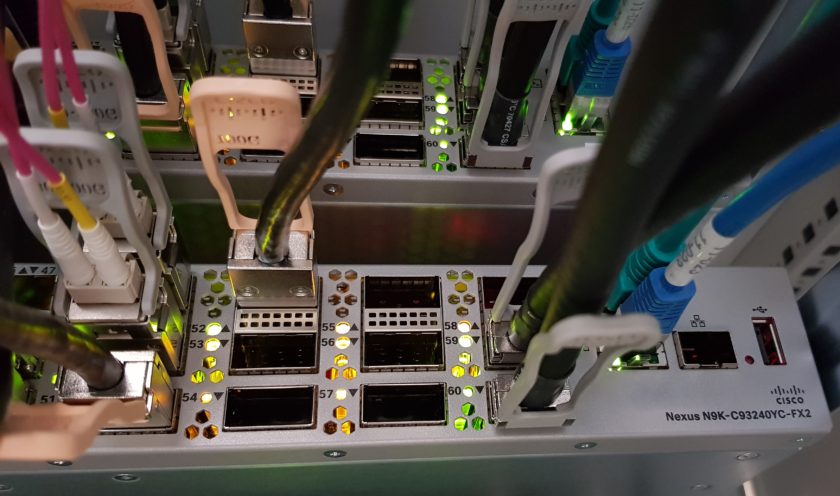
If you have more than three Cisco Nexus switches in nx-os mode, and you are not using Cisco DCNM or any other similar tool, you probably already have encountered this question: How to automate file uploads to your Cisco Nexus switches?
Here is a turnkey Python script using Netmiko’s SCP function to do this.
Here is the third post of the series on network troubleshooting and tools under RHEL / CentOS. In this post, I will talk about the SS and netstat commands.