VXLAN EVPN ESI multi-homing on Nexus 9000

VXLAN EVPN ESI multi-homing on Nexus 9000

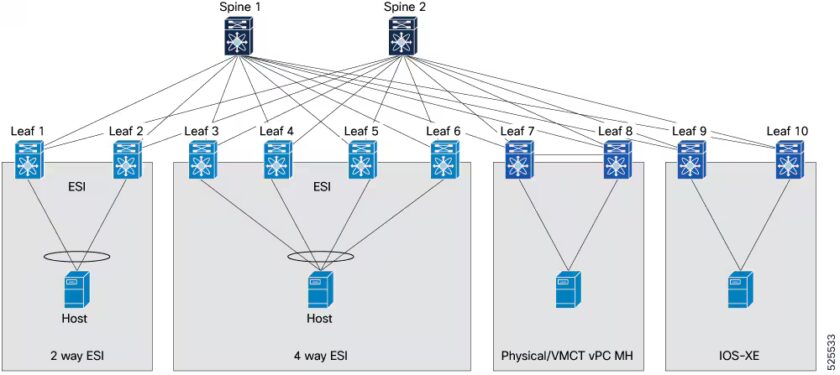
For years, multi-homing in VXLAN BGP/EVPN fabrics with Cisco Nexus switches meant one thing: vPC.  It works very well; two-switch redundancy, familiar operational model, no need to deeply understand EVPN’s native multi-homing details. At the same time, vPC has always carried operational overhead: peer-links, keepalive link, the potential peer-link bandwidth limitation, and the hard ceiling of two switches. With NX-OS 10.6(1), Cisco finally brings full native VXLAN EVPN ESI multi-homing on Nexus 9000!

This post digs into what that means and how it works.
Migrating Cisco FabricPath and Classic Ethernet Environments to VXLAN BGP/EVPN over a 400Gb-based Clos Topology, part 1 – the why

Migrating Cisco FabricPath and Classic Ethernet Environments to VXLAN BGP/EVPN over a 400Gb-based Clos Topology, part 1 – the why

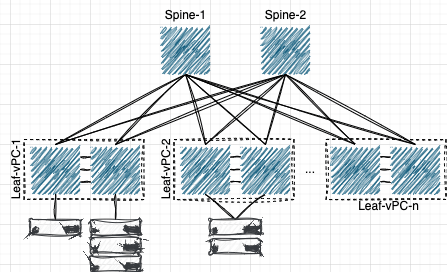
During the past three years, I have spent a good portion of my time testing, planning, designing, and then migrating our DC network from Cisco FabricPath and Classic Ethernet environments to VXLAN BGP/EVPN. And simultaneously, from a hierarchical classic two-tier architecture to a more modern Clos 400Gb-based topology.

The migration is not yet 100% completed, but it is well underway. And I have gained significant experience on the subject, so I think it’s time to share my knowledge and experiments with our community.